Notes from below

Notes from below@nfb

0 followers
Follow

2025 episodes (5)

Older than the tongues that named me
Ep. 05

Older than the tongues that named me

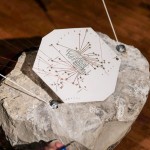
Bianca Baldi is an artist whose work explores history, meaning, and knowledge production, often through narrative, fiction, and the reconfiguration of historical contexts and events. In this interview, Baldi speaks about her relationship to writing and sound, the documentary image, and narrative. She reflects on how she navigates personal and collective histories of land, colonial exploitation, and belonging through sound and image, temporal constructions, and the embodied ‘voice’ of a sycamore tree. The audio piece features an original composition with choral vocals by Gabi Motuba and sound design by Andrei van Wyk. The composition was workshopped as a sonic dialogue with a poem Baldi wrote in response to a 1939 photograph of the artist’s grandfather in Ethiopia.
Corazón de Robota
Ep. 04

Corazón de Robota

In this episode, Bhavisha Panchia speaks to artist Constanza Piña about her work as Corazón de Robota, her DIY practice of building instruments and synthesizers, and her long-term installation and performance project Khipu / Electrotextile Pre-Hispanic Computer. Piña discusses the khipu as a ‘speaking knot’ and transmitter; how we might think of electrotextile computers; the role of cosmotechnics in reading and understanding systems of knowledge; and the importance of artistic speculation in reimagining alternate possibilities. The two excerpts are recordings of her performance as Corazón de Robota at Bar Neun on 17 September 2025.

Sketches
Ep. 03

Sketches

Bhavisha Panchia speaks to Simnikiwe Buhlungu about her working with sound, how knowledge is moved, recreated, translated and recomposed. She talks about the relationship between the aural and the ocular, listening practices, and some past projects, working with printmaking collective DGI at the Centre for the Less Good Idea, and her solo show at Kunsthalle Bern. The episode features working ‘sketches’ from the artist. Timeline: THESUNISOUT! (on Antonelli in 2024), excerpt Interview Cicadas (Bogor National Park), excerpt Tswaing Crater (12-11-2023), excerpt Sarphatistraat 47, excerpt Last Sketch

My Mouth is a Vessel
Ep. 02

My Mouth is a Vessel

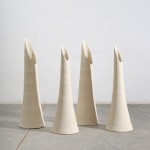
In this episode, Bhavisha Panchia speaks with artist Ana Paula Santana about her practice working with clay, voice and resonance. The sound commission is titled, My Mouth is a Vessel (2025) and emerges from an exploration of the sonic potential of ceramic material activated purely by air. It is constructed entirely with sounds from ocarinas and ceramic whistles crafted by the artist, brought to life through an air compressor, hoses, and an air pressure control gun. These sounds are then routed and processed through a single effects pedal (Hologram Microcosm Granular Pedal) to generate pulses via granular synthesis. By examining the unique sonic qualities of each ceramic piece—its size, cavities, and densities—these sounds establish the foundational rules shaping this commission. The work also connects to the artist’s interest in using ceramic forms as a means of understanding the human body, tracing the journey of air from mouth to lungs, where it transforms into resonance: the wonder we call voice.

Songs of the high dam
Ep. 01

Songs of the high dam

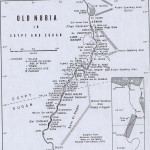
Gilles Aubry in conversation with Alia Mossalam The high dam of Aswan in Egypt was built from 1960 to 1964. Thousands of Nubian people were displaced in the flooding operation and relocated to other places in Egypt or Sudan. Alia Mossalam offers comments about Nubian songs that relate to this history, between propaganda, nostalgia, guilt, and anger. Alia Mossallam is a cultural historian, educator and writer interested in songs that tell stories and stories that tell of popular struggles behind the better-known events that shape world history. For her PhD she researched a popular history of Nasserist Egypt through the stories and experiences of the popular resistance in Port Said (1956) and Suez (1967-1974) and the construction of the Aswan High Dam through the experiences of its builders and the Nubian communities displaced by it. Some of her research-based articles, essays and short-stories can be found in The Journal of Water History, The History Workshop Journal, the LSE Middle East Paper Series, Ma’azif, Bidayat, Mada Masr, Jadaliyya and 60 Pages. An experimentative pedagogue, she founded the site-specific public history project “Ihky ya Tarikh”, as well as having taught at the American University in Cairo, the Freie Universität in Berlin, and continuing to teach at the Cairo Institute for Liberal Arts. In 2024, she works at the Humboldt-Universität zu Berlin as a research associate within the project SONIC RESOCIALIZATION and remains an associated EUME Fellow in 2024-25.